
FEATURED
Did you see a massive jump in your website traffic in February? Was your information based on Google Analytics 4 (a.k.a GA4)? You should review your account. Around February 17th, a breach occurred in GA4 through Google Tag Manager. Google Tag Manager is the code a person can edit that collects and sends data to Google Analytics. In Lamen’s terms, a person or group of people found a way to add code to GA4 that falsely inflated traffic numbers.
The surge in seemingly high traffic numbers was due to spam websites. Originating primarily from Poland, this spam traffic tampered with GA4 by artificially increasing “referral traffic” counts. Referral traffic is visitors to your website from other websites, most likely through a link. But, this “hack” did not reflect actual visits to the affected website, resulting in what’s known as “ghost traffic.” These visitors never actually visited the websites, but GA4 recorded them.
For those using GA4 to gain insights into website traffic, the flood of ghost traffic tainted the reliability of their data. Aside from traffic data, ghost traffic can also skew other user metrics in GA4. For example, bounce rate and session duration may appear lower due to the influx of false traffic. This can make it challenging for website owners to accurately measure their website’s performance and make informed decisions for optimization. Additionally, ghost traffic can also impact conversion tracking, making it challenging to determine the effectiveness of advertising campaigns or overall website conversions.
To fix this, immediate action was required to sift through and identify the bogus traffic sources. Google advised users to review their GA4 account, pinpoint the affected data, and block the IP addresses linked to the spamming referral websites. This tactic was a good start if you had an agency or an internal IT person to block this traffic. Otherwise, you were stuck until Google figured it out.
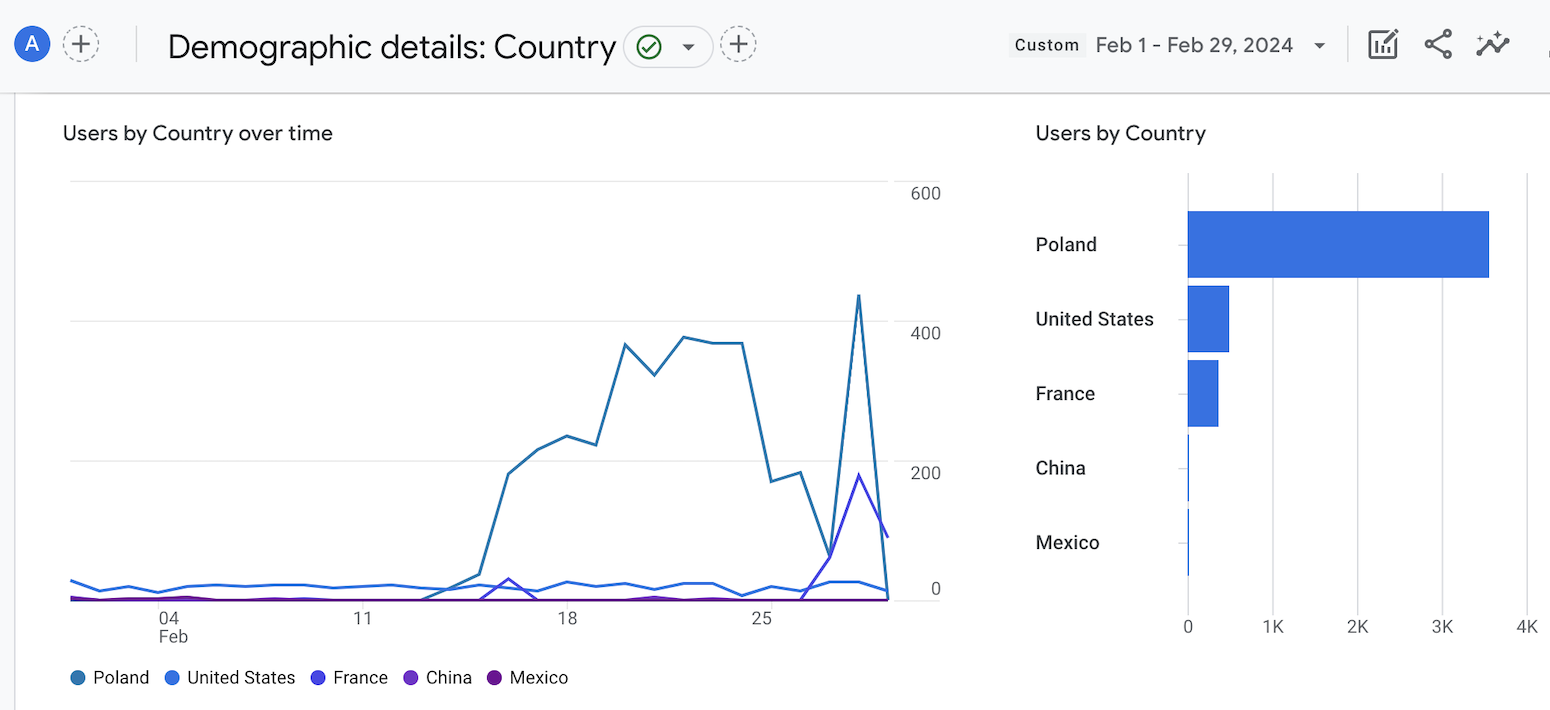
If you are familiar with Google Analytics (GA4):
If there is significant traffic from Poland, your website visitors and metrics are inaccurate.
OR
Your website could have been affected if it received a large amount of referral traffic. Typically, referral traffic on a website is a category producing a small number of users.
As of this article’s writing, Google has fixed this issue. If you want to know your website’s impact, contact us at Power Marketing, and we will provide a free analytics check.